
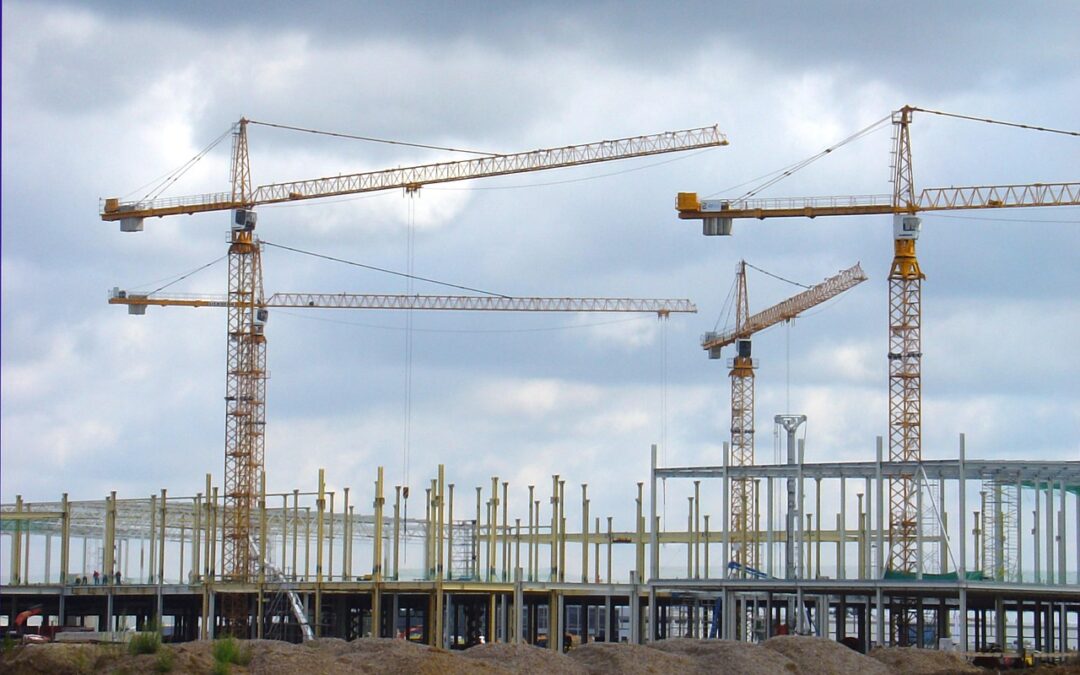
Some high percentage of businesses looking to locate new business operations, or relocate existing operations, say they are looking to move into an existing building for their operations. Although a much lower percentage of those businesses ends up using an existing building, it’s conventional wisdom in the economic development industry that you’ve got to have the inventory to even get businesses to look at your community. So everyone needs, or wants, one or more industrial shell buildings.
If you don’t have the cash on hand, and you’ve exhausted your grant opportunities, how can your local government borrow money to build a shell building? Here are seven different financing techniques, along with four cautionary notes about borrowing for these projects:
Installment financing is how most North Carolina local governments borrow most of their money. This technique functions similarly to a lease-purchase financing, where the lender gets a security interest in the building and the real property. If your shell building is part of a larger economic development project, you might evaluate your repayment plan for the debt as if it were a synthetic tax-increment financing.
Voter-approved bonds. Believe it or not, voters will approve your locality’s borrowing money for a project like this — if you make the case. You could ask for approval narrowly for shell buildings, or more generally for economic development purposes. Voter-approved bonds offer you flexibility in financing terms, and don’t require you to use your building site or anything else as physical collateral. Here’s a recent post we did on asking voters for approval.
Two-thirds bonds are general obligation bonds that don’t require voter approval. Read more about them here. Industrial parks and shell building development are permissible uses for two-thirds bonds. Again you have flexibility in financing terms, and you don’t need to use your building site or anything else as physical collateral.
Through an interlocal agreement. Think of this as a public-public partnership! Your locality doesn’t have to carry the full burden. One locality can for example provide a building site, and another can borrow money for the building itself – perhaps with the two localities dividing both debt service costs and sale proceeds. That way both entities get the benefit with only one having to incur the debt. This seems to us to be an ideal opportunity for town-county collaboration, or collaboration between a low tier and a high tier community.
Through a public-private partnership. Just like an interlocal agreement, but with a private partner instead of a second locality. We’ve heard of property owners who can’t afford to construct a building, but are willing to partner with the locality for some shared profit from the eventual sale. Or it could work the other way — the locality might have a site to lease or sell to a private developer as a way to reduce everyone’s costs.
From cash on hand/shell building revolving fund. Of course you can always pay cash for a building. It’s difficult for most localities to dedicate that much cash, however, and usually folks want to move more quickly and not wait years to save up. But the second time is always easier — you can turn your sale proceeds into a fund that revolves to help finance the next building.
As a tack-on to some other financing. If your local government is already planning to do an installment financing for a project, the lender will usually be amenable to your adding extra money into the deal for a shell building project, without adding the shell building to the collateral. Most local governments can borrow money for projects and offer collateral equal to only 50% or so of the amount financed (that’s half the amount financed, not twice the amount financed). We are lucky in North Carolina to have so many banks ready to make flexible loans to local governments for our projects.
And now for the notes of caution:
Watch your bid law compliance – if your local government’s money is ultimately paying for the project costs, directly or indirectly, then you may need to comply with the bid laws for your building, no matter whose name the construction contracts are in.
Avoid guarantees – we have encountered even experienced local government attorneys who were unaware that the State constitution prohibits local governments from guaranteeing debts of private entities. (See clauses 3 and 5 of section 4). So don’t do it. There are legal ways to get close to a guarantee, but a bank’s form for a flat-out guarantee is not something you should mess with.
Don’t forget about the LGC – If you’re borrowing money to construct improvements to real property, you should expect that you’ll need the LGC’s approval. We know that loans from the federal government are generally exempt from needing LGC approval, but we’ve also seen projects that have loans from other entities that folks want to characterize as “kinda sorta from a federal program” to avoid LGC approval. The LGC isn’t interested in standing in the way of your financing a shell building, although they do have certain rules and standards, and there will be a timeline. Don’t hesitate to go through that process to ensure legal compliance.
Don’t go along with a developer that suggests a tax-increment financing. We just outlined seven simpler, more conventional ways to finance a shell building. TIF has never caught on in North Carolina, for reasons we reviewed here. If a developer suggests a TIF, then be wary of what else they (don’t) know about the lay of the land in our State. And, there’s no reason to try to convince the LGC staff about a TIF when we have so many good alternatives.
If we can help you with a specific situation or provide you with more information on any topic covered in this post, click here to send us an email. Please see our disclaimer and click here for more information on our public finance practice.